
Asbestos disposal in California: where can it go, what are the rules and what does it cost?
Friable waste with 1 percent or more asbestos is California hazardous waste. It is sealed wet in leak-tight containers. Over 50 pounds, it needs a registered hazardous waste transporter and a manifest. Non-friable waste is not hazardous waste, but county landfills take it as special handling. Published guides put disposal at $10 to $50 per cubic yard.
Which kind you have decides who can haul it and where it can go. We do asbestos removal across the Central Valley, the Bay Area and Sacramento, and disposal is part of that work.
Is asbestos a hazardous waste in California?
Only some of it. California’s Department of Toxic Substances Control (DTSC) sets the rule. It classifies asbestos-containing material as hazardous waste when it is friable and holds 1 percent or more asbestos. That standard sits in 22 CCR 66261.24.
Friable has a plain test. A friable waste can be reduced to a powder or dust under hand pressure when dry. When asbestos is a hazardous waste, DTSC regulates its packaging, storage on site, transport and disposal.
Federal hazardous waste law leaves asbestos out. The U.S. EPA does not regulate asbestos as hazardous waste under the Resource Conservation and Recovery Act (RCRA). That makes friable asbestos a non-RCRA, or California-only, hazardous waste.
Non-friable bulk waste lands on the other side of the line. DTSC considers it non-hazardous regardless of its asbestos content, so the state’s hazardous waste rules do not cover it. Other agencies keep their own requirements, and landfills set their own terms.
Not sure which kind you have? DTSC says the waste must then be tested by a lab certified under the state’s Environmental Laboratory Accreditation Program (ELAP). The lab reports the percentage of friable asbestos in the material.
A certified asbestos consultant does the sampling, and we do the removal. On an asbestos removal job, that lab result sets the disposal path for the waste.
How does asbestos waste have to be packaged for disposal?
Wet and sealed, with labels. The federal asbestos rule, 40 CFR 61.150, says to wet the waste first. All of it is then sealed in leak-tight containers while still wet. Pieces that will not fit without more breaking go into leak-tight wrapping.
Containers leaving the site carry the name of the waste generator and the location where the waste was generated. A waste shipment record travels with the load. It lists the generator, the approximate quantity in cubic yards, the disposal site and the date the waste was transported. The waste goes to a disposal site run under 40 CFR 61.154 as soon as practical.
DTSC spells out what counts as a container. Plastic bags at least 6 mil thick pass, and so do cartons, drums or cans that keep the fibers in. Wrapped waste loaded straight into a trailer or drop box needs a plastic sheeting liner and a tarp on top. DTSC also says to check with your local air district for extra packaging rules.
Cal/OSHA’s asbestos rule for construction work, 8 CCR 1529, covers the worker side. Asbestos waste, debris, used bags, equipment and contaminated clothing go out in sealed, labeled, impermeable bags or closed containers. Roofing work follows its own procedure under that rule.
The federal packaging steps have an exception on demolition and renovation jobs. They do not apply to non-friable waste that has not crumbled or been reduced to powder. Landfills can still ask for more. The Merced County landfills take non-friable asbestos only “wetted and burrito wrapped,” in their own words.
Who can haul asbestos waste in California?
For hazardous asbestos waste over 50 pounds, a registered hazardous waste transporter. DTSC requires that hauler to take it to a permitted treatment, storage or disposal facility. A uniform hazardous waste manifest, the shipping paper, travels with the waste. Under the federal rule, vehicles hauling asbestos waste must be marked during loading and unloading, with the signs visible.
The generator also needs an ID number. In California, anyone who generates hazardous waste must get a hazardous waste ID number before shipping it. Remodeling or abatement waste can go out under a one-time temporary California ID number from DTSC. Those temporary numbers are only active for 90 days.
Small household loads follow a looser rule. Households may carry under 50 pounds of household hazardous waste to a collection event or facility in any safe manner. The catch is that DTSC says most household hazardous waste programs do not accept asbestos waste. Call your local facility before you load anything.
Non-friable waste sits outside DTSC’s hazardous waste rules, so those transporter and manifest steps do not apply to it. The landfill still sets the terms, and each one sets them differently. On our asbestos removal jobs, the waste leaves the site packaged and documented as part of the job.
Where can you dispose of asbestos in Stanislaus, Merced and Sacramento counties?
All three county landfill systems in the table take non-friable asbestos, each on its own terms. Friable asbestos is harder to place. Fink Road turns it away, and the other two do not list it.
A landfill needs permission to take asbestos at all. DTSC says that authorization comes from its Regional Water Quality Control Board and from CalRecycle. It points to CalRecycle’s SWIS database for searching landfill permits. It also says to call a landfill before you bring asbestos and ask about appointments and special requirements.
| Facility | County | Friable asbestos | Non-friable asbestos | Published fee |
|---|---|---|---|---|
| Fink Road Sanitary Landfill (Class III) | Stanislaus | Not accepted. Callers are referred to Forward Landfill. | Only with an approval letter from the County’s Department of Environmental Resources, Tuesday to Friday, 9:00 a.m. to 2:00 p.m. | Special Handling $120.00 per ton, $24.00 minimum for non-friable asbestos (prices effective July 10, 2025) |
| Highway 59 and Billy Wright landfills (Merced County Regional Waste Management Authority) | Merced | Not listed | A special waste, taken only wetted and burrito wrapped, with prior notification or approval | Call for approval |
| Kiefer Landfill | Sacramento | Not listed | Special Handling, daily from opening until 1:30 p.m. | $347.80 per ton (2026 fees, effective January 1, 2026) |
Fink Road is a Class III landfill for nonhazardous municipal solid waste. Its Special Handling means a special hole, with the load buried immediately. Loads are pre-approved and come by appointment.
“Not listed” means the facility’s posted fee or special waste page does not mention friable asbestos. Read it as a question to ask, never as a yes. The fees are the landfills’ own posted rates, not our prices.
What does asbestos disposal cost?
Published guides put asbestos disposal at $10 to $50 per cubic yard, plus $50 to $100 for a permit. The two county landfills here that post asbestos rates charge by the ton. None of these figures are our prices.
HomeGuide says disposal fees range from $10 to $50 per cubic yard, and permits generally cost $50 to $100. HomeAdvisor gives $10 to $50 per cubic yard for most disposal, plus $50 to $100 for a disposal permit. Fixr also lands around $10 to $50 per cubic yard. It says the price depends on how much landfill space the material takes.
Angi puts the two costs together. It tells readers to budget for disposal and permit fees, which add $150 or more to the total.
Landfill rates vary by county. Fink Road charges $120.00 per ton for Special Handling, with a $24.00 minimum for non-friable asbestos. Kiefer charges $347.80 per ton for Special Handling under its 2026 fees, almost three times the Fink Road rate. Below a ton, Kiefer prorates the fee or applies its minimum weight charge.
Posted rates change over time. Fink Road’s sheet lists prices effective July 10, 2025, and Kiefer’s fees took effect January 1, 2026. Check the current sheet before a load goes out.
When you compare removal bids, check whether each one includes disposal. Our asbestos removal cost guide covers published removal prices by material.
Can a homeowner dispose of asbestos without a contractor?
Fixr notes that no federal law bans a homeowner from removing asbestos in their own home. The condition is proper disposal, and Fixr adds that the EPA strongly advises using a professional. State and local rules still apply, and in California they make asbestos disposal hard to do alone.
Each step has its own rule:
- Friable waste over 50 pounds needs a registered hazardous waste transporter and a manifest.
- Households may carry under 50 pounds of household hazardous waste to a drop-off. DTSC says most of those programs do not accept asbestos.
- Landfills set conditions. Fink Road asks for an approval letter from the County’s Department of Environmental Resources and an appointment.
- Teardowns bring in the air district. In the San Joaquin Valley Air Pollution Control District, any regulated demolition needs a notification, asbestos or not.
- Hiring help brings in Cal/OSHA. Asbestos work of 100 square feet or more needs Cal/OSHA registration.
Start by finding out what the material is. Our guide to asbestos testing before demolition covers when testing is required and who does it.
How does asbestos disposal fit into a demolition or a floor job?
The asbestos work comes first. In the Valley Air District, a state-certified asbestos abatement contractor must finish all regulated asbestos abatement before a demolition starts. The air district also gets 10 working days’ notice before demolition.
The district calls a job a demolition when a load-bearing member of the structure comes out. So a remodel that takes out a load-bearing wall can count as one. DTSC notes that building remodeling and demolition projects produce much of today’s asbestos waste.
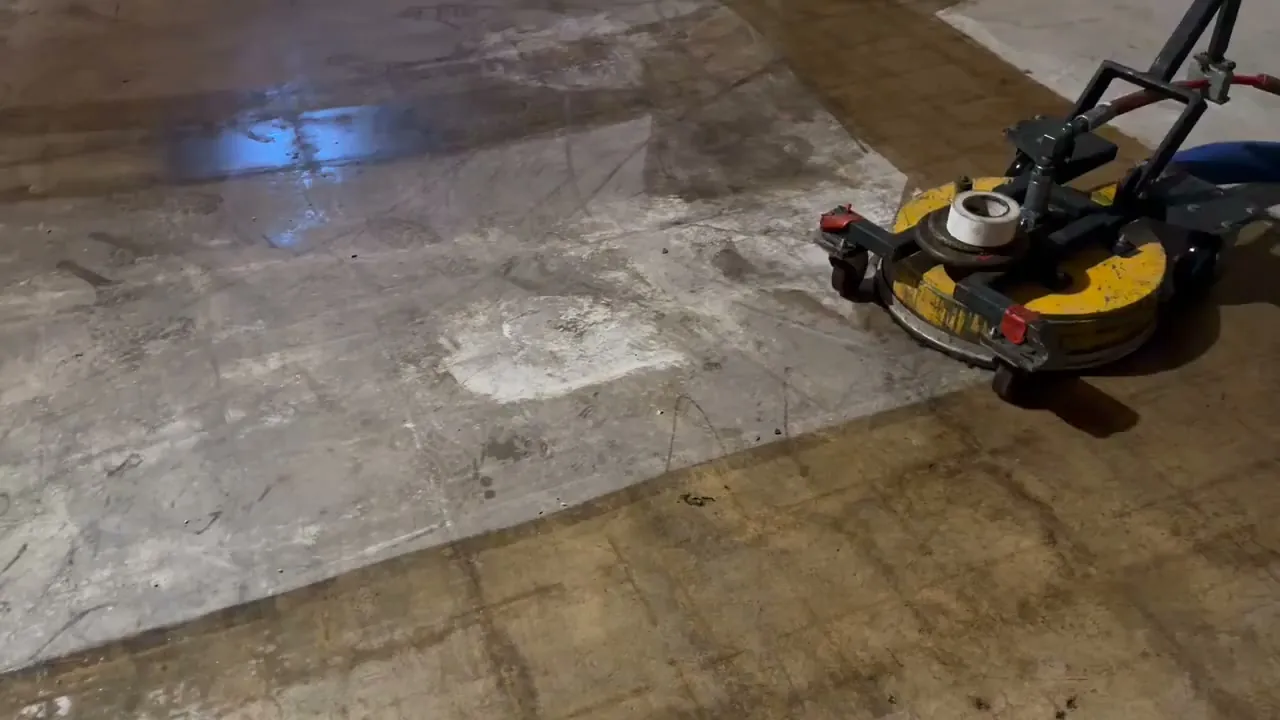
On a floor job, the old tile and its adhesive become the waste. Our asbestos floor tile removal work takes up both. We spent decades in flooring before moving into environmental and demolition work. Today we take asbestos adhesive off concrete slabs with water alone at 40,000 psi, under full HEPA vacuum recovery.
On a teardown, the asbestos removal clears the way for residential demolition. Our demolition permit guide covers the building department and air district steps.
We hold CSLB #247684 and CAL OSHA #507, and we have been a family company since 1967. Call (209) 652-9206 or request a free estimate, and send the consultant’s report if you have one.