
Asbestos encapsulation vs removal: which one does your project need?
Asbestos encapsulation seals the material in place, and removal takes it out. The EPA says material in good condition that will not be disturbed is usually best left alone. Sealing or covering can suit intact material. Federal rules require regulated asbestos to come out before demolition, and a remodel that disturbs it may require removal.
We do asbestos removal. A certified asbestos consultant does the testing, and the choice between these paths starts with that report.
What is asbestos encapsulation?
The EPA describes two kinds of action for asbestos material that is more than slightly damaged or could be disturbed. One is repair, and the other is removal. Repair usually involves either sealing or covering the material. With any type of repair, the asbestos remains in place.
Sealing is what the EPA calls encapsulation. A sealant either binds the asbestos fibers together or coats the material so fibers are not released. The EPA says pipe, furnace and boiler insulation can sometimes be repaired this way. It also says the work should be done only by a professional trained to handle asbestos safely.
Covering is what the EPA calls enclosure. Something is placed over or around the material to keep the fibers in. The EPA’s example is a protective wrap or jacket over exposed insulated piping.
California treats asbestos encapsulation as asbestos work. Cal/OSHA’s asbestos rule for construction covers removal and encapsulation alike. It counts encapsulation as a repair of asbestos material. Repair work that is likely to disturb asbestos is its own class of regulated work under that rule.
There is a reason for that caution. The EPA lists repair among the ways asbestos material can release fibers, next to cutting, sanding and drilling.
Removal is the other path. Cal/OSHA defines removal as taking asbestos material out of a structure or stripping it off, and that includes demolition. Removal is the work we do, and our asbestos removal page covers how a job runs.
When is it reasonable to leave asbestos in place?
When the material is in good shape and nothing will disturb it. The EPA says the best thing is usually to leave asbestos material alone if it is in good condition. Material that is in good condition and will not be disturbed, by remodeling for example, will not release fibers.
That matches how exposure happens. The EPA says exposure generally occurs only when asbestos material is disturbed or damaged and releases fibers.
Leaving material alone still takes some attention. The EPA says to keep an eye on it and check it over time for signs of wear or damage. It names tears, abrasions and water damage as signs to look for.
Encapsulation and enclosure sit between leaving it alone and taking it out. The EPA offers them for material that is more than slightly damaged or could be disturbed. They fit best when no planned work will tear into that material.
None of this can be judged by eye. The EPA says you can’t tell whether a material contains asbestos simply by looking at it. If in doubt, it says to treat the material as if it contains asbestos and leave it alone.
A certified asbestos consultant does the sampling. Our guide to asbestos testing before demolition or renovation covers who does that work and when the rules require it. If the material is a textured ceiling, our guide to popcorn ceiling asbestos covers that case.
When does asbestos have to come out instead?
The EPA names two cases. Removal may be required when remodeling or making major changes to your home will disturb asbestos material. It may also be called for when the material is damaged extensively and cannot otherwise be repaired. The EPA adds that removal is complex and must be done only by a trained and accredited asbestos professional.
Removal done wrong can make things worse. The EPA says improper removal may actually increase your family’s exposure to asbestos fibers.
Demolition and renovation also bring in a federal rule, the asbestos NESHAP. It requires all regulated asbestos material to come out of a building first. That means before any work that would break it up, dislodge it or block access to it. The rule has a few narrow exceptions.
One exception covers Category I nonfriable material that is in good condition and not friable. Category I is a short list of packings, gaskets, resilient floor covering and asphalt roofing products. Nonfriable means the material will not crumble to powder under hand pressure when dry. Once Category I material is sanded, ground, cut or abraded, it counts as regulated material.
Sealed asbestos is still asbestos under these rules. With any repair, the asbestos stays in place. So it still has to come out before work that would break it up.
The federal rule leaves out residential buildings with four or fewer units. California air districts add their own rules on top. The Bay Area district’s notice rules reach houses too. Homes of four or fewer units get a separate notice option.
In the Bay Area, the district must be notified at least 10 business days ahead of two kinds of jobs. One is any renovation that removes 100 square feet or more of asbestos. The other is every demolition, regardless of asbestos content.
Worker rules apply as well. Cal/OSHA registration is required before asbestos work involving 100 square feet or more of asbestos material.
On a remodel, removal comes before the interior demolition strip-out. On a teardown, it comes before the residential demolition work starts.
How do encapsulation, enclosure and removal compare?
The biggest difference is what happens to the asbestos. That choice follows the building into every later project.
| Encapsulation (sealing) | Enclosure (covering) | Removal | |
|---|---|---|---|
| What happens to the asbestos | A sealant binds the fibers or coats the material. The asbestos stays in place. | Something goes over or around it, like a pipe jacket. The asbestos stays in place. | It is taken out or stripped from the structure. |
| When it fits | Material that can be sealed, such as some pipe, furnace and boiler insulation | Material that can be covered and left alone, such as exposed insulated piping | Before demolition or a remodel that will disturb it, or when damage is too extensive to repair |
| What it means for a future remodel or demolition | The asbestos is still there. Disturbing it later brings the removal rules back. | The asbestos is still under the cover. Opening it up later disturbs the material. | That material is gone and no longer stands in the way. |
| Who does it | A professional trained to handle asbestos safely (EPA) | Trained and accredited asbestos professionals (EPA) | A trained and accredited asbestos professional (EPA). In California, a Cal/OSHA registered contractor for 100 square feet or more |
| Published cost | $2 to $6 per sq ft | Depends on the cover. New flooring over sealed tile runs $4 to $15 per sq ft installed. | $5 to $15 or more per sq ft for interior work |
Cost figures are published market ranges, not our prices. The encapsulation range comes from HomeGuide and Fixr. The flooring and removal ranges come from HomeGuide.
Can you cover asbestos floor tile instead of removing it?
Yes, when the tile is intact and the new floor goes in without disturbing it. Laying new flooring over old tile is covering in the EPA’s terms. Something goes over the material to keep fibers in.
HomeGuide describes a similar approach, with new flooring laid over a sealed floor. It suggests encapsulating a floor when the floor is in decent shape.
Cal/OSHA is strict about old flooring. It assumes resilient flooring, with its mastic and backing, contains asbestos unless an industrial hygienist finds it asbestos-free. Sanding flooring material is prohibited.
The federal rule lists resilient floor covering as Category I nonfriable material. Sanding, grinding, cutting or abrading it makes it regulated material. That makes floor prep the risky step, since grinding tile flat or cutting it to fit disturbs it.
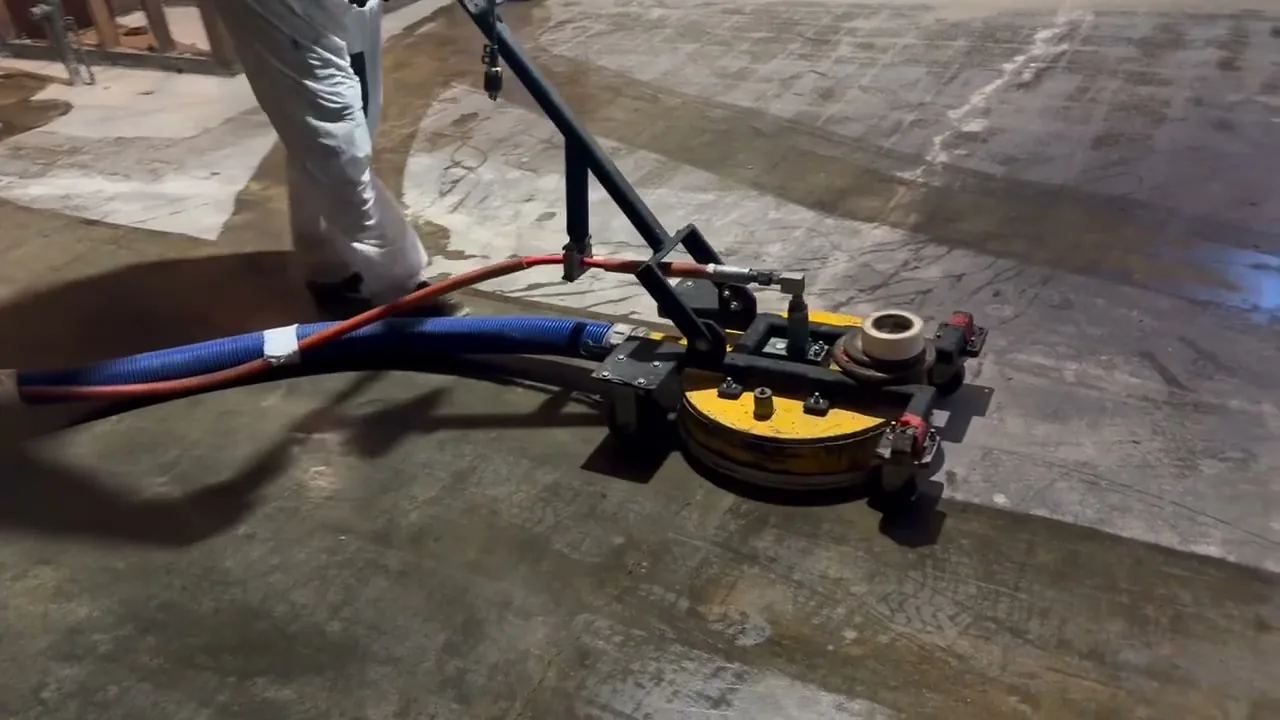
Taking the tile up is removal, and that is our asbestos floor tile removal service. Floors are familiar ground for us, since we spent decades in flooring before moving into environmental and demolition work. We strip asbestos adhesive off concrete slabs with water alone at 40,000 psi, under full HEPA vacuum recovery.
Does asbestos encapsulation cost less than removal?
Up front, usually. HomeGuide puts the average cost of asbestos encapsulation at $2 to $6 per square foot. It calls that cheaper than most asbestos removal jobs. Fixr lists the same $2 to $6 range.
On the removal side, HomeGuide puts interior work at $5 to $15 or more per square foot. Fixr says encapsulating asbestos tile and pipes typically costs 15% to 25% less than removal. It says encapsulation saves on disposal and demolition costs.
HomeGuide also notes that encapsulation is not an option in every case. The lower number has a catch, too. The sealed asbestos stays in the building. If a later remodel or demolition will disturb it, removal may be required then, and you pay for both jobs.
The decision turns on the material’s condition and what your project will disturb. Our asbestos removal cost guide breaks down published removal prices by material. None of these figures are our prices.
Who tests the material, and who removes it?
A certified asbestos consultant does the sampling, and we do the removal. Start with the consultant’s report, then decide whether the material can stay or has to come out.
Asbestos work of 100 square feet or more needs Cal/OSHA registration. We hold CAL OSHA #507 and CSLB #247684, and we have been a family company since 1967. We remove asbestos across the Central Valley, the Bay Area and Sacramento.
If removal is on your list, contact us or call (209) 652-9206. Send the test report and tell us what your project will disturb. Estimates are free.